EN
 AR
 BG
 CS
 DA
 NL
 FI
 FR
 DE
 EL
 HI
 IT
 JA
 KO
 NO
 PT
 RU
 ES
 SV
 TL
 ID
 LV
 UK
 VI
 GL
 HU
 TH
 TR
 AF
 MS
 GA
 BE
 BN
 EO
 JW
 LA
 MN
 MY
 UZ
 GD

In assessing the level of automation in ice block machine production lines, the conversation tends to become a simple one of more expensive automated equipment versus less expensive, human labor. It is not a helpful approach for buying managers and engineers to make a real capital decision. It is important to know how and where automation can be applied to a block ice production line, what the different functions are between a semi-automatic and a fully automatic system and which parts of the labor and cost are actually impacted. This article explains those details for buyers to understand which automation level corresponds with his or her operational reality.
Where Automation Actually Applies in a Block Ice Production Line
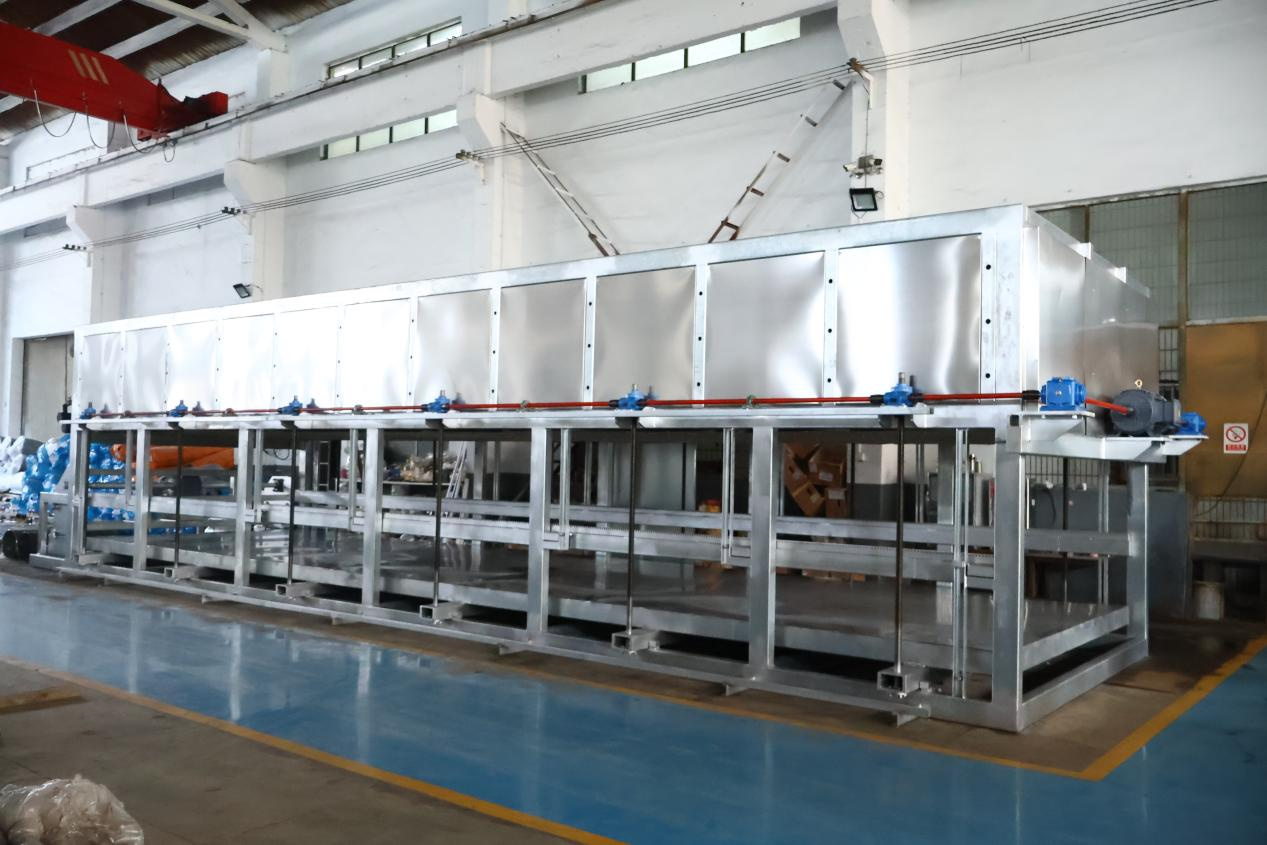
A block ice machine is not a single, automatic machine, but a series of stages and automation can be introduced selectively at each stage. The main stages include filling with water in ice molds, freezing stage, defrosting (removal of ice from ice molds), ice harvesting (removing ice blocks from the ice molds), and post-harvest handling (transports to ice storage or crushing).
Semi-automatic systems are usually automatic for the freezing cycle, but the other critical manual labor intensive steps are automatic. After defrosting, operators will need to physically remove ice blocks from the molds and in the traditional brine based systems, a crane is usually needed for the job which involves safety risks and requires specialized personnel. The machine can control the temperature and operate the compressor automatically, but the manual operation of ice block handling is still a problem.
Fully automatic systems fill this void. Today's direct-cooling block ice machines that are PLC controlled handle it all: auto water replenishment with metered dosing, controlled freezing cycles, hydraulic or hot-gas defrosting and automatic ice release and delivery! Others have automatic stacking/cold storage conveyance features, which eliminate an operator touch point between mold filling and final storage. Physical operation with shift to monitoring of screens and responding to alarms.
What Separates Semi-Automatic from Fully Automatic: Functional Differences
The difference between semi-automatic and fully automatic block ice harvesting lines can be distilled down to three features: harvesting, monitoring and integration.
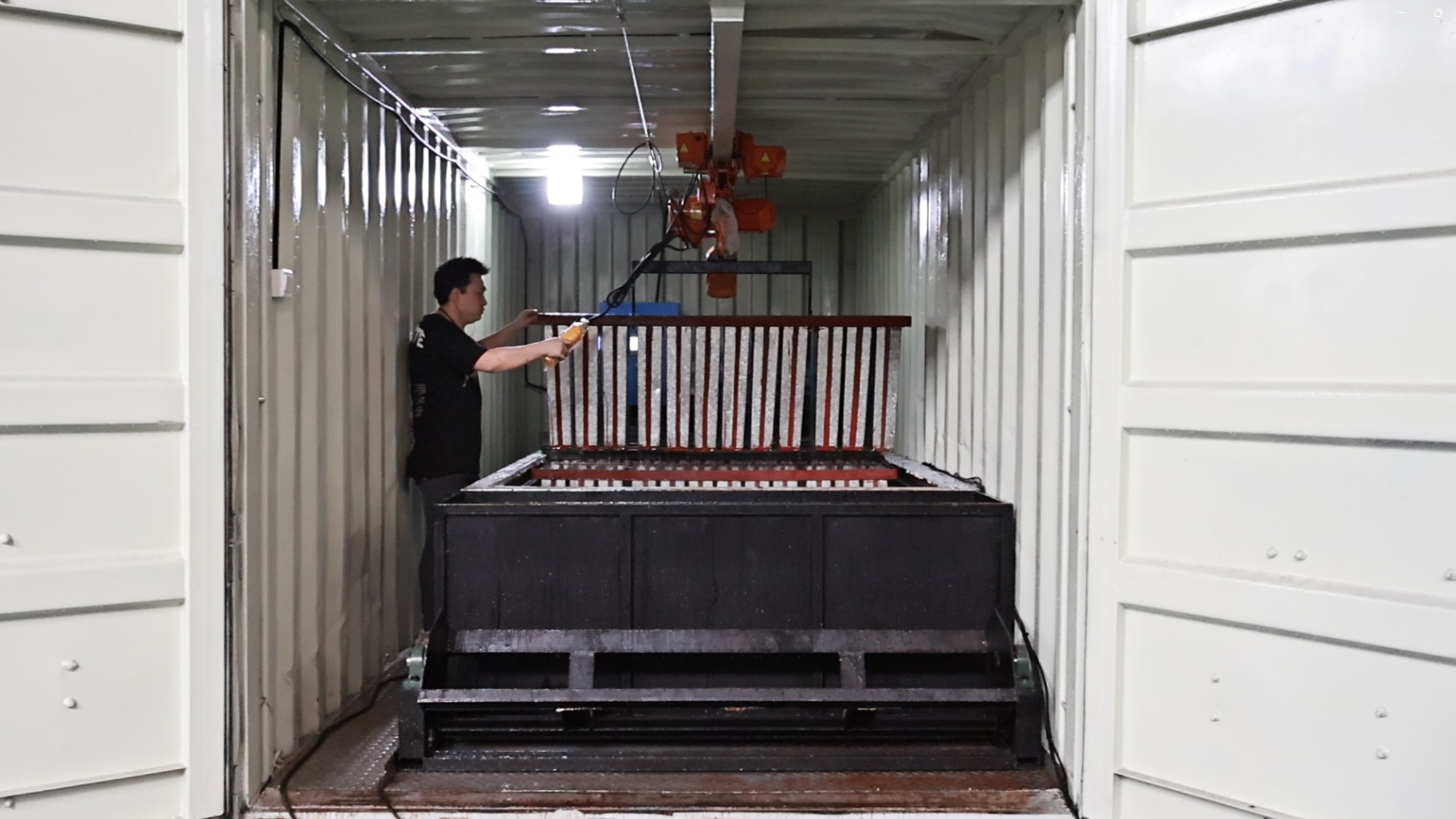
The most obvious difference is harvesting. For semi-automatic lines, the freezing cycle is finished, and an operator is required to start the defrosting and manually remove the blocks (using lifting equipment in brine systems). A fully automatic direct-cooling system will automatically drop ice blocks from hydraulic deicing lifting platforms. This isn't just a convenience, it's what's going to dictate the number of operators required per shift, and the degree of consistent, uninterrupted running of the line.
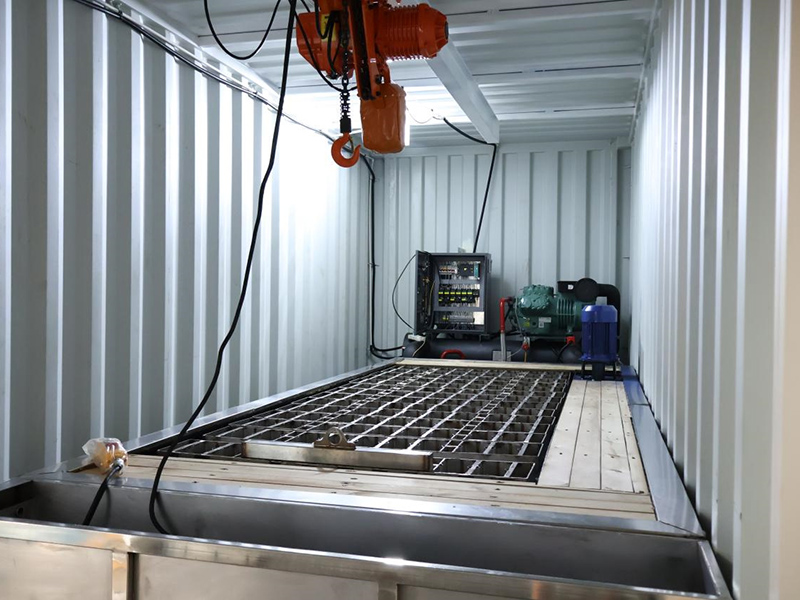
There is a difference in depth of monitoring and control. Semi-automatic machines generally have simple thermostat and timer controls. A fully automatic system includes PLC platforms and parameters such as temperature, pressure and cycle times are tracked in real time, and may include remote fault alarms through network connection. This is important for the purposes of preventive maintenance: A fully automatic line can alert a drifting refrigerant pressure before it is a production stoppage.
Another differentiator is the integration with auxiliary systems. An automated ice storage, conveying and even ice breaking system can be added to fully automatic lines, ensuring a continuous flow from ice freezing to dispatch. Typical semi-automatic lines will typically end at the mold, and all the following work will be manual or need to be done manually.
The Real Labor and Cost Calculus
Automation does not offer a general benefit of labour savings; it offers a specific, measurable benefit. The most immediate savings are the ice harvesting labor savings. Semi-automatic brine: At least one operator needed for operating the crane and handling the mold in every harvest cycle. The same capacity can be used by a harvest supervisor in a fully automatic direct-cooling system, without any special harvest operator required.
A second type of labor is ice transport and stacking. When blocks have to be manually handled from the discharge point to storage, it is a constant labour demand. This role is eliminated with automated stacking and conveyor integration.
Another category is "machine supervision" but here the savings are not as dramatic as vendors sometimes suggest. Even with fully automatic lines, an operator must be on site to respond to alarms and other abnormal conditions. However, the operator is not relieved of the job in an absence of physical work, but in the absence of the operator.
The premium on the cost side is due to several identifiable effects of full automation. Hydraulic deicing systems involve a more complex mechanical solution, and therefore a higher cost, than the traditional hot-gas or manual defrosting solution. PLC control platforms with sensors, variable frequency drives and remote monitoring capabilities are a substantial investment in instrumentation compared to simply electromechanical controls. Precision hardware such as automated water metering and filling systems are found in semi-automatic systems but not in automatic systems. Lastly, advanced parts – such as corrosion resistant evaporators, replicated molds made to withstand cycling – are required since automated lines cycle more times a day and cannot accept downtime that manual lines can. The initial investment for a fully automatic line is generally 2-4 times as much as that of a semi-automatic line, depending on the capacity and set-up of the line.
The financial equation with automation is not as simple as “automation saves money.” An automatic direct-cooling system may require less energy per ton of ice, since it eliminates the need for a brine tank and its related thermal losses, however, the savings will be dependent on cycle management and compressor efficiency. While the costs of maintenance on automatic systems are likely to be higher on a per-incident basis with the more complicated sensors and hydraulics, the number of man handling mistakes and the variability of operating parameters can be reduced, which will decrease unplanned downtime.
Matching Automation Level to Operational Reality
The decision should hinge on three practical questions, not on a general preference for automation.
What is your labor availability and cost structure?
In regions where reliable operators are scarce or labor costs are rising, the harvest and transport labor eliminated by full automation translates directly into reduced operating expense and fewer production interruptions. In contexts where labor is abundant and inexpensive, the payback period on automation extends significantly.
What is your required production continuity?
If your business requires consistent daily output with minimal variance—supplying food processing plants, cold chain distributors, or export operations—the process consistency of a fully automatic line reduces the risk of quality variation and shortfalls. If demand is seasonal or intermittent, a semi-automatic line’s lower capital burden and simpler maintenance may be more appropriate.
What is your technical support infrastructure?
Fully automatic lines with PLC controls and hydraulic systems require maintenance personnel with diagnostic capabilities beyond basic electrical and refrigeration skills. If local technical support is limited, the sophisticated features of an automatic line can become liabilities when they fail. A semi-automatic system’s simpler architecture is more forgiving in low-support environments.
The right automation level is not the highest one available. It is the one whose eliminated labor and improved consistency align with your actual cost structure, production requirements, and maintenance capabilities. Buyers who understand exactly what each automation tier does—and does not do—can make that determination with confidence.