EN
EN
 AR
AR
 BG
BG
 CS
CS
 DA
DA
 NL
NL
 FI
FI
 FR
FR
 DE
DE
 EL
EL
 HI
HI
 IT
IT
 JA
JA
 KO
KO
 NO
NO
 PT
PT
 RU
RU
 ES
ES
 SV
SV
 TL
TL
 ID
ID
 LV
LV
 UK
UK
 VI
VI
 GL
GL
 HU
HU
 TH
TH
 TR
TR
 AF
AF
 MS
MS
 GA
GA
 BE
BE
 BN
BN
 EO
EO
 JW
JW
 LA
LA
 MN
MN
 MY
MY
 UZ
UZ
 GD
GD
ICEMA 10-Ton Direct-Cooling Block Ice Machine Combines Refrigeration and Ice Handling Technology
Jiangsu ICEMA Refrigeration Equipment Co., Ltd. has developed a 10-ton direct-cooling block ice machine configuration for a customer in Suqian, China. The project specifies a Hanbell screw compressor, evaporative condensing, Schneider Electric components, remote control and an ice-pushing system.
The configuration connects refrigeration, equipment control and finished ice handling within a coordinated production process. Its technical focus extends from heat transfer during freezing to the movement of blocks after release. The proposed schedule is 255 blocks per batch and two batches per day, with final mould dimensions and operating conditions determining actual output.
Direct Cooling and the Freezing Process
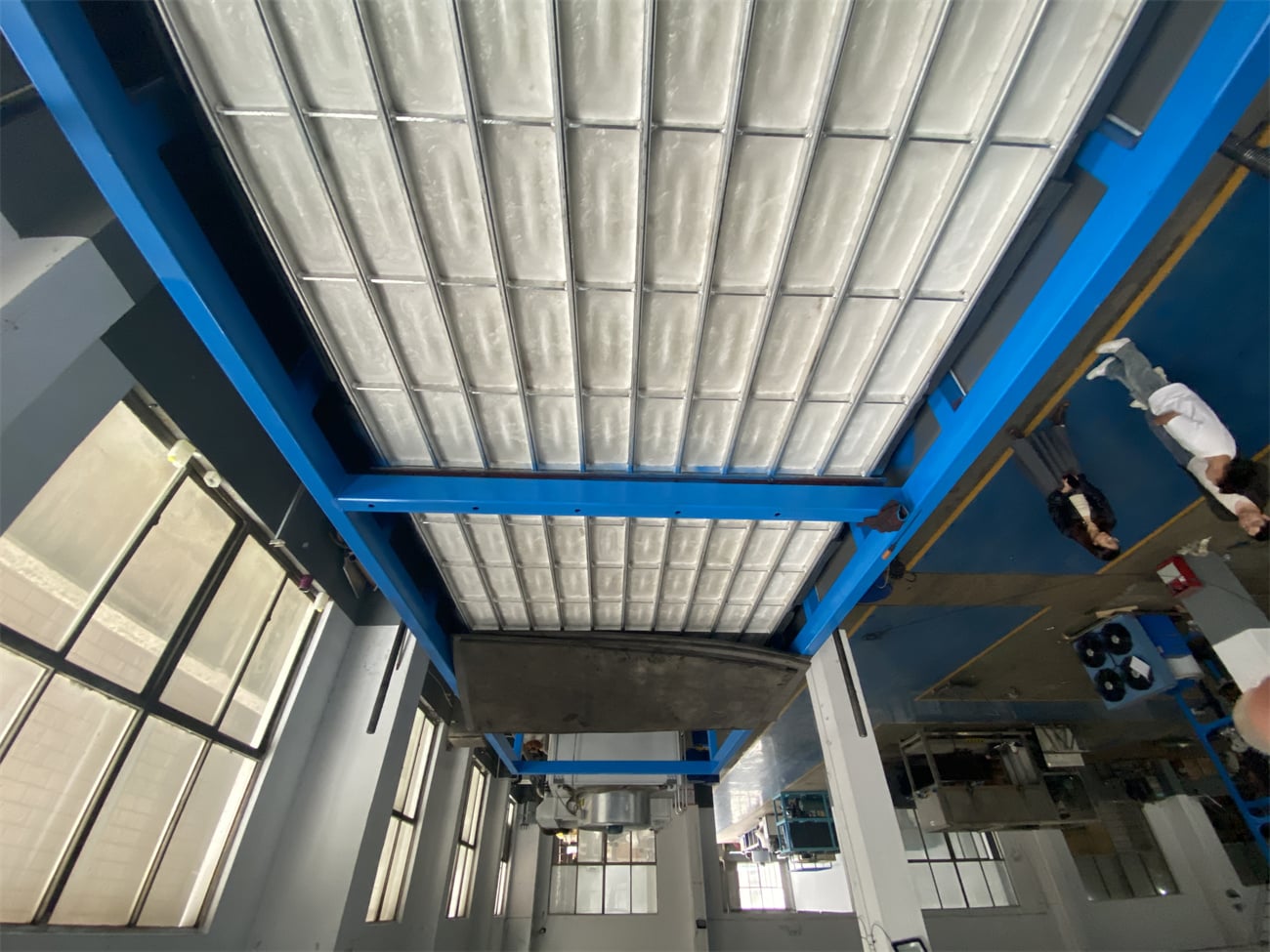
Direct-cooling block ice production removes heat from water through the evaporator walls. Refrigerant evaporates inside a sealed circuit, absorbing heat as the water in the mould cavities gradually freezes. The refrigerant and the water remain physically separated throughout this process.
This arrangement eliminates the intermediate brine circuit used in conventional brine-based systems, removing the need for brine circulation and concentration management. The evaporator serves as the main heat-transfer interface between the refrigeration circuit and the water.
Effective freezing requires coordination between mould geometry, water fill volume and cooling conditions. These factors influence how freezing progresses across a batch and how long the machine needs before ice removal can begin. For this project, confirming the final mould dimensions is an important step in matching block specifications with the intended production schedule.
Matching the Screw Compressor to the System
The specified Hanbell screw compressor drives refrigerant circulation and establishes the pressure conditions needed for evaporation and condensation. Its performance must be considered together with the evaporator and condenser rather than assessed solely by brand or nominal capacity.
The refrigeration load depends on the quantity of water being processed, its inlet temperature and the intended freezing period. The compressor must work with an evaporator capable of transferring that heat and a condenser capable of rejecting it under site conditions.
Batch freezing also involves changing thermal conditions as water cools and turns into ice. Equipment selection and commissioning therefore need to address the full production cycle. Coordinating these components provides the engineering basis for evaluating capacity and stable operation.
Evaporative Condensing and Heat Rejection
The project uses evaporative condensing to discharge heat from the refrigeration system. The condenser must reject both the heat absorbed during ice formation and the energy added through compression.
Its operating conditions affect the refrigeration circuit as a whole. Condenser selection should therefore account for the installation environment, local air conditions and available water, alongside the requirements of the compressor and evaporator.
For this configuration, the technical objective is to coordinate heat absorption at the freezing end with heat rejection at the condensing end. Commissioning under representative site conditions is important for checking whether the combined system supports the planned production cycle.
Electrical Control and Remote Operation
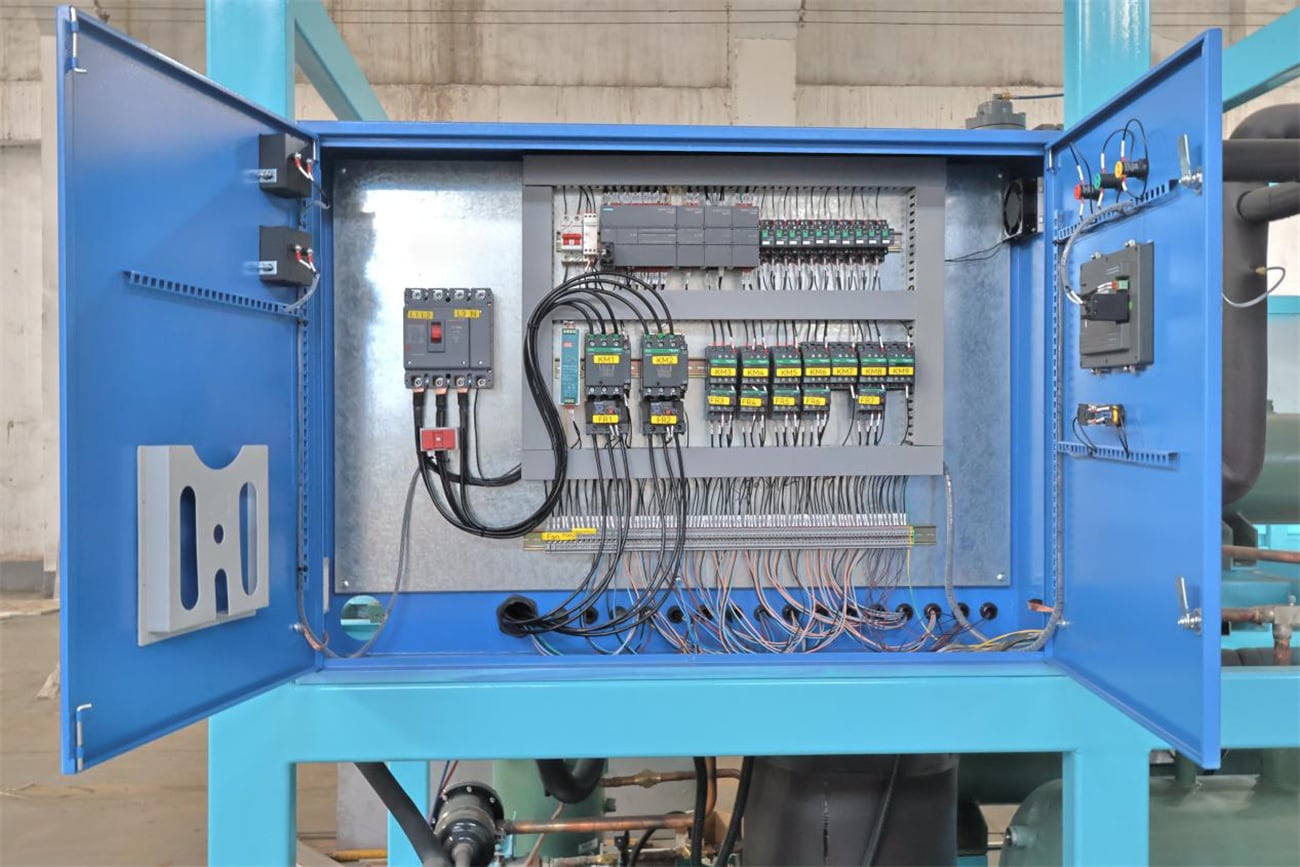
Schneider Electric components and a remote control system form part of the specified configuration. Their role is to support equipment operation and coordinate the electrical functions associated with refrigeration and ice handling.
A batch machine requires a defined operating sequence. Freezing must reach the appropriate stage before ice removal proceeds, while mechanical movements need to occur under suitable operating and safety conditions.
Remote control provides an additional operating interface, but its specific functions depend on the final system design. Operating permissions, control scope and protective conditions should be defined during integration. This ensures that remote commands remain consistent with the machine’s operating sequence and on-site procedures.
Ice Pushing Connects Freezing with Handling
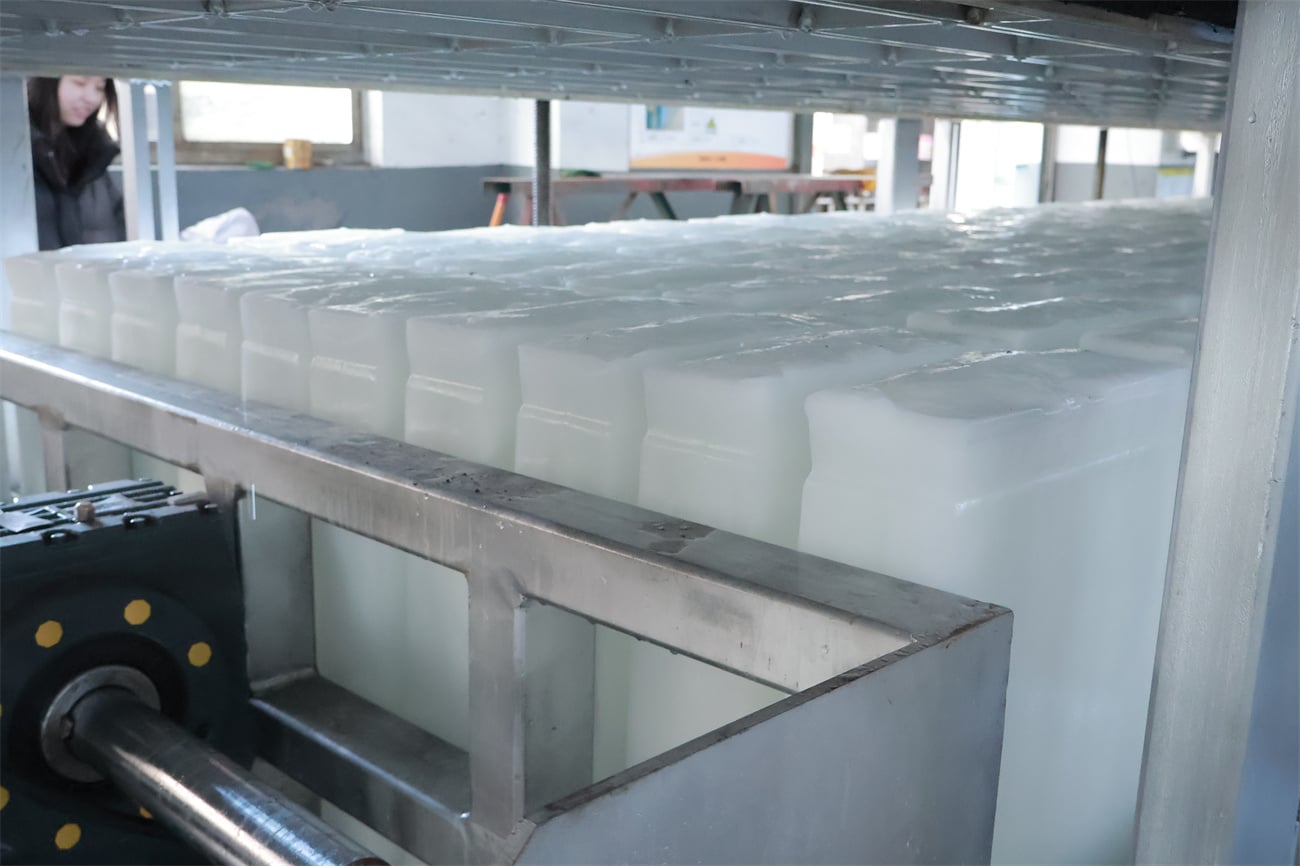
The ice-pushing system supports the movement of blocks after release from the moulds. Including this equipment in the overall configuration brings downstream handling into the production design from the outset.
The receiving area, movement direction and onward transfer route all influence how finished ice leaves the machine. These arrangements should be coordinated with the pushing mechanism so that blocks can move into the next handling stage.
Control sequencing is equally relevant. Ice must be ready for movement, and the receiving path must be available before pushing begins. Addressing these interfaces connects mechanical design with site layout and helps organise the transition between consecutive production batches.
Planning Around the Complete Production Cycle
The proposed schedule of 255 blocks per batch and two batches per day provides a basis for planning. Final output must also account for confirmed block specifications, freezing time, ice removal and preparation for the next batch.
By combining direct-cooling heat transfer, matched refrigeration components, electrical controls and an ice-pushing system, ICEMA’s 10-ton configuration addresses the complete production process. This approach gives customers a practical framework for coordinating equipment selection, installation layout and commissioning around their block ice production requirements.
Hot News
-
ICEMA 10-Ton Direct-Cooling Block Ice Machine Combines Refrigeration and Ice Handling Technology
2026-10-10
-
Chile New Ice Plant Equipped with a 5T/24h Tube Ice Production and 5 kg Automatic Packing System
2026-09-14
-
25-Ton Tube Ice Machine Project in Changzhou Enters Assembly Stage for Reactor Cooling
2026-09-10
-
15T Brine Block Ice Machine for a Dominican Republic Ice Plant: Flexible Supply for Large-Scale Ice Production
2026-08-26
-
Order Delivery of Six 30-Ton Seawater Flake Ice Machines for Catch Preservation on Ocean-Going Fishing Vessels
2026-07-28
-
ICEMA Ships 40T Direct Cooling Block Ice and Cold Room Project to Mexico for Broccoli Preservation
2026-06-18
-
Addressing Power Grid Fluctuations: Parallel Piston Compressor Solutions for Industrial Tube Ice Machines
2026-05-06
-
Empowering Cold Chain Upgrades in SE Asia: Shanghai Icema to Exhibit at Indonesia Cold Chain Expo 2026
2026-05-05
-
Côte d'Ivoire Client Revisits ICEMA, Deepening Cooperation to Write a New Chapter in Ice Making
2025-07-16
-
ICEMA 30T / day flake ice machine into the Peruvian market: a number of advantages to help aquatic products preservation
2025-02-24