EN
EN
 AR
AR
 BG
BG
 CS
CS
 DA
DA
 NL
NL
 FI
FI
 FR
FR
 DE
DE
 EL
EL
 HI
HI
 IT
IT
 JA
JA
 KO
KO
 NO
NO
 PT
PT
 RU
RU
 ES
ES
 SV
SV
 TL
TL
 ID
ID
 LV
LV
 UK
UK
 VI
VI
 GL
GL
 HU
HU
 TH
TH
 TR
TR
 AF
AF
 MS
MS
 GA
GA
 BE
BE
 BN
BN
 EO
EO
 JW
JW
 LA
LA
 MN
MN
 MY
MY
 UZ
UZ
 GD
GD
Order Delivery of Six 30-Ton Seawater Flake Ice Machines for Catch Preservation on Ocean-Going Fishing Vessels
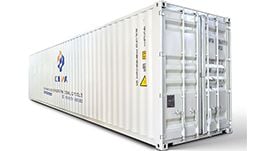
Shanghai Icema Refrigeration Technology Co., Ltd. is currently completing a large marine seawater flake ice machine project. The order includes six 30-ton seawater flake ice machines, which will be installed on ocean-going fishing vessels to supply ice for cooling and preserving freshly caught seafood.
The first three machines have completed production and are now undergoing a second round of factory testing. Once testing is completed, delivery will be arranged according to the shipyard’s construction and inspection schedule.
Customer Ice Requirements
Supplying Preservation Ice for Ocean-Going Fishing Operations
The project is being managed by a well-known marine equipment contractor in Jiangsu, China. The machines will ultimately be installed on ocean-going fishing vessels.
During long fishing voyages, catches must be cooled as quickly as possible after being brought on board. Delayed cooling can affect the freshness and quality of fish and other seafood. The vessels therefore require a continuous onboard ice supply for catching, sorting and storage operations.
Flake ice is thin and easy to spread evenly over seafood. Its large contact area makes it suitable for rapid cooling and short-term preservation of fish and other aquatic products.

Six Machines for One Large-Scale Marine Project
The customer purchased six 30-ton seawater flake ice machines for centralized installation within the same large-scale vessel project.
Each machine has a rated daily ice production capacity of 30 tons, giving the six-machine project a combined rated capacity of 180 tons per day.
Centralized procurement and standardized equipment configurations also make it easier for the marine contractor to coordinate installation interfaces, shipyard construction and future equipment management.
Marine Operating Conditions and Application Requirements
Producing Ice Directly from Natural Seawater
The machines will use natural seawater directly during ocean-going operations.
Compared with freshwater, natural seawater contains higher levels of salt and chloride ions. Long-term exposure can cause corrosion in evaporators, water tanks, ice blades, condensers and other components.
For this reason, the project could not simply use the material configuration of a standard land-based freshwater flake ice machine.
Using seawater directly also reduces the amount of freshwater required for onboard ice production, making the system better suited to long fishing voyages.
Adapting to Limited Engine-Room Space
Space inside a vessel’s engine room is limited. Equipment dimensions, pipeline direction, lifting points and maintenance access therefore need to be confirmed before production.
In addition to the required ice capacity, the project team adjusted the machine interfaces and piping layout according to the shipyard’s installation conditions.
This ensures that the machines can be lifted into the engine room and connected correctly to the vessel’s cooling-water, electrical and drainage systems.
For project confidentiality reasons, the exact equipment dimensions and weights are not disclosed.
Controlling Noise and Vibration
Noise and vibration can be more noticeable inside a vessel because machinery is installed in a relatively enclosed space. Vibration from compressors, motors and piping may also be transferred through the equipment frame and ship structure.
The customer specifically requested that the machines should not produce excessive operating noise.
The project therefore considers motor selection, compressor mounting, frame support and pipeline fixing. Actual onboard noise levels will also depend on the equipment foundation, vibration-isolation measures and engine-room structure provided by the shipyard.
Seawater Flake Ice Machine Configuration
Two 15-Ton Evaporators per Machine

Each 30-ton seawater flake ice machine is equipped with two parallel 15-ton flake ice evaporators.
This configuration meets the required daily ice capacity while providing greater flexibility for equipment arrangement within the available engine-room space.
The machines operate on 380 V, three-phase, 50 Hz power. They use a water-cooled system with R507A refrigerant.
The refrigeration system includes a marine Hanbell compressor together with liquid-supply, oil-separation, gas-liquid separation and control-protection components.
SUS316L Stainless Steel for Seawater Contact Parts
To suit direct seawater operation, the evaporator main shaft, ice blade, water distribution tray, water baffle, water tank, upper and lower bases, and inner and outer evaporator surfaces are made of SUS316L stainless steel.
Compared with standard SUS304 stainless steel, SUS316L is more suitable for chloride-containing environments. It is used for the parts directly exposed to seawater to reduce the risk of pitting and localized corrosion during long-term operation.
The electrical control cabinet does not come into direct contact with seawater, so it is manufactured from SUS304 stainless steel to meet structural and environmental protection requirements.
Titanium-Tube Seawater Condenser
The seawater condenser uses a carbon-steel shell, 2205 duplex stainless-steel end covers and titanium heat-exchange tubes.
The titanium tubes handle seawater-side heat exchange and are suitable for continuous seawater circulation. The 2205 stainless-steel end covers are selected for areas exposed to salt, water flow and humid conditions around the condenser inlet and outlet.
The machine frame is hot-dip galvanized for heavy-duty corrosion protection, helping it withstand salt-laden and humid marine environments.
Production Testing and Batch Delivery
The First Three Machines Enter Second-Round Testing
The first three seawater flake ice machines have completed production and assembly and are now undergoing a second round of factory testing.
Testing includes:
· Complete machine trial operation
· Flake ice production testing
· Refrigeration-system pressure testing
· Electrical control and protection testing
During testing, the operating conditions of the compressors, evaporators, condensers and protection devices are checked.
Production, assembly, testing and customer inspection are also documented with project photographs.

Delivery Coordinated with Shipyard Progress
The six machines are scheduled for delivery in two batches of three units.
The first batch will be delivered after the second round of testing and once the shipyard is ready to receive the equipment.
The phased delivery arrangement is not caused by insufficient production capacity. It is necessary because the vessels are still under construction and some engine-room and installation conditions are not yet complete.
Delivering all six machines too early could result in extended storage, repeated handling or difficulties caused by unfinished lifting and installation conditions.
The delivery schedule therefore needs to remain aligned with the vessel construction plan, shipyard milestones and project inspection dates.
Project Value
The six 30-ton seawater flake ice machines will provide the ocean-going fishing vessels with onboard ice production capacity.
The machines can use natural seawater directly to produce flake ice, supplying a continuous source of cooling and preservation ice while reducing freshwater consumption onboard.

More importantly, the equipment has been configured around the actual requirements of ocean-going fishing vessels, including seawater corrosion, limited engine-room space, installation interfaces, noise, vibration and phased delivery.
This is not simply a land-based flake ice machine installed on a vessel, but a project-specific solution developed for marine fishing operations.
Hot News
-
ICEMA BMF100 10-Tonne-Class Flake Ice Machine
2026-10-15
-
ICEMA 10-Ton Direct-Cooling Block Ice Machine Combines Refrigeration and Ice Handling Technology
2026-10-10
-
Chile New Ice Plant Equipped with a 5T/24h Tube Ice Production and 5 kg Automatic Packing System
2026-09-14
-
25-Ton Tube Ice Machine Project in Changzhou Enters Assembly Stage for Reactor Cooling
2026-09-10
-
15T Brine Block Ice Machine for a Dominican Republic Ice Plant: Flexible Supply for Large-Scale Ice Production
2026-08-26
-
Order Delivery of Six 30-Ton Seawater Flake Ice Machines for Catch Preservation on Ocean-Going Fishing Vessels
2026-07-28
-
ICEMA Ships 40T Direct Cooling Block Ice and Cold Room Project to Mexico for Broccoli Preservation
2026-06-18
-
Addressing Power Grid Fluctuations: Parallel Piston Compressor Solutions for Industrial Tube Ice Machines
2026-05-06
-
Empowering Cold Chain Upgrades in SE Asia: Shanghai Icema to Exhibit at Indonesia Cold Chain Expo 2026
2026-05-05
-
Côte d'Ivoire Client Revisits ICEMA, Deepening Cooperation to Write a New Chapter in Ice Making
2025-07-16