EN
EN
 AR
AR
 BG
BG CS
CS
 DA
DA
 NL
NL
 FI
FI FR
FR
 DE
DE EL
EL
 HI
HI
 IT
IT JA
JA
 KO
KO
 NO
NO PT
PT RU
RU
 ES
ES
 SV
SV
 TL
TL
 ID
ID
 LV
LV
 UK
UK VI
VI
 GL
GL
 HU
HU
 TH
TH
 TR
TR
 AF
AF
 MS
MS
 GA
GA
 BE
BE
 BN
BN
 EO
EO
 JW
JW
 LA
LA
 MN
MN
 MY
MY
 UZ
UZ
 GD
GD
15-тонна машина за производство на ледови блокове от разтвор за ледена фабрика в Доминиканската република: гъвкава доставка за производство на лед в големи мащаби
Когато ледената фабрика планира производствена линия с капацитет 15 тона на ден, предизвикателството не е просто изборът на по-голяма ледена машина. Хладилната система, размерът на ледените блокове, строителството на обекта, бюджетът и международната логистика трябва да са съвместими. В един скорошен проект в Доминиканската република клиент, който произвежда ледени блокове за продажба, избра бринова система за производство на ледени блокове с капацитет 15 T/24 h, но не всички части от фабриката ще бъдат доставени от Китай. Вместо това проектът е разделен между оборудване, доставено от фабриката, и конструкции, изработени локално.
Изискване за 15 тона на ден за ледена фабрика
Клиентът директно е посочил производствена цел от 15 тона на ден, като всеки отделен блок тежи 100 кг и един цикъл на замразяване се извършва на ден, което прави тази инсталация система за производство в големи обеми за търговски продажби на лед, а не малка локална машина за лед.
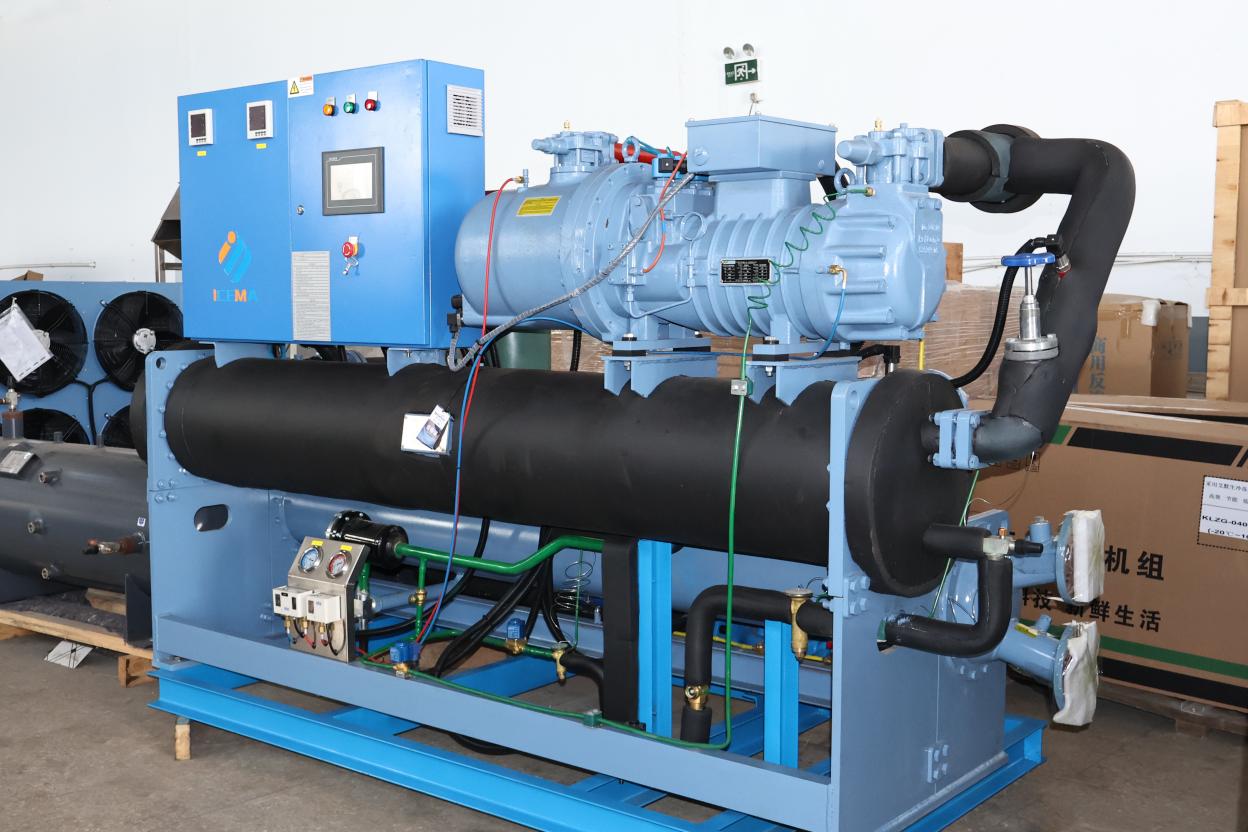
За основния рефрижерационен участък системата е конфигурирана за трехфазно напрежение 220 V, 60 Hz , с водно охлаждане и хладилен агент R404A. Доставеното оборудване включва рефрижерационна единица RefComp 15T, помпа за разтвор, разбърквател, охладителна кула, водна помпа и стойка за изваждане на леда . Тези компоненти формират основната рефрижерационна и циркулационна система за проекта.
Защо резервоарът за разтвор ще бъде изграден локално
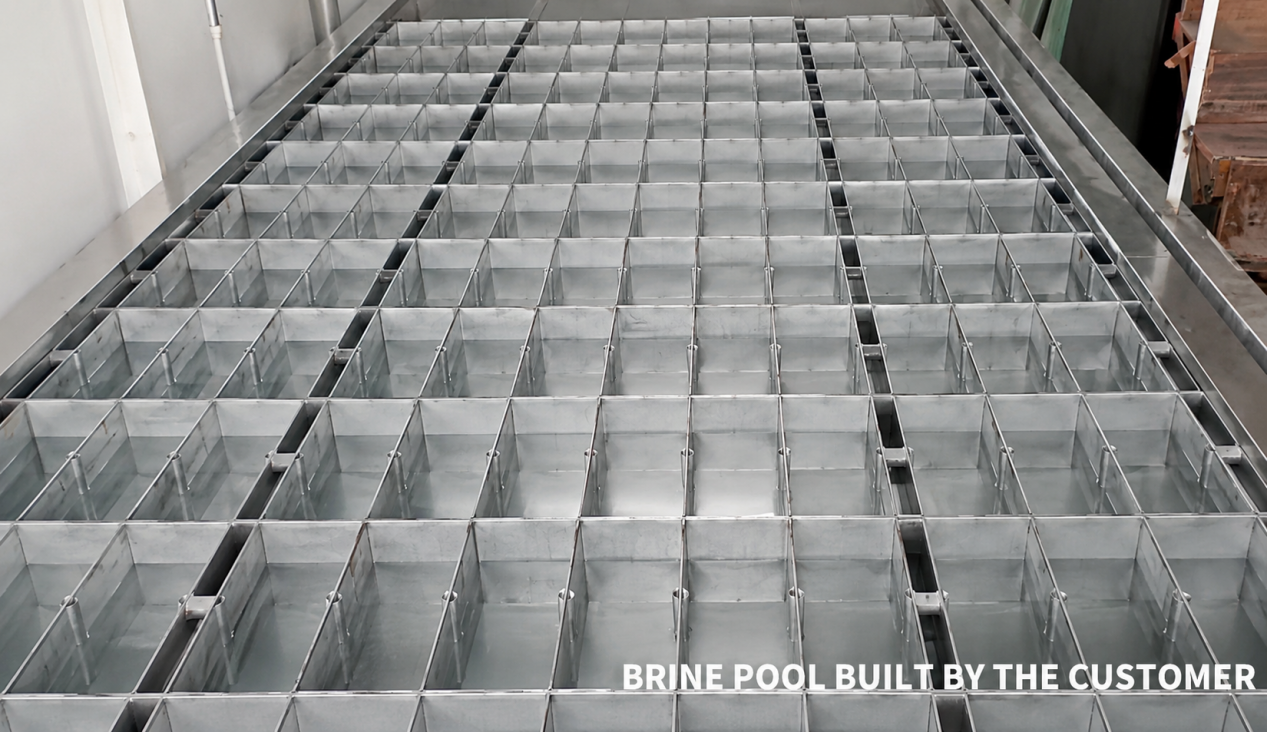
Резервоарът за разтвор е важна част от традиционната инсталация за производство на блоков лед с разтвор, но в този проект клиентът е избрал да го изгради локално. ICEMA ще предостави чертежи и технически препоръки, за да подкрепи локалната работа.
С увеличаването на производствената мощност резервоарът за разтвор става голяма конструкция. Международното му транспортиране може да заеме значително транспортно пространство и да усложни логистиката. Затова местното строителство може да бъде практически вариант, когато са налични подходящи производствени ресурси.
Този избор обаче трябва да бъде обсъден с производителя на оборудването преди започване на строителството. Размерите на резервоара, интерфейсите на оборудването и изискванията за инсталиране все още трябва да съответстват на рефрижерационната система. Целта не е просто да се премахне голям предмет от доставката, а да се гарантира, че локално изграденият участък ще работи коректно заедно с доставеното оборудване.
Разделяне на обхвата на доставката, за да съответства на проектния бюджет
Клиентът също избра да произведе локално ледените съдове, пътуващия кран и стоманения каркас да се запази проектът в рамките на бюджета. Това създава гъвкава доставна модел: основното охладително и циркулационно оборудване се доставя от производителя на машината, докато няколко големи структурни и поддържащи елемента се произвеждат в Доминиканската република.
За чуждестранните покупатели този подход може да бъде полезен, когато е налично местно производство и превозът на обемисти конструкции не е най-практичното решение. Той също така дава на покупателя повече възможности да балансира инвестициите в оборудването, транспортните разходи и разходите за местно строителство.
Разделната доставка все още изисква координация. Елементите, произведени локално, остават част от пълната система за производство на ледови блокове, затова техните размери и изисквания за свързване трябва да бъдат потвърдени преди началото на производството или строителството.
Практически справочник за чуждестранни заводи за производство на ледови блокове
Този проект показва защо машината за производство на ледени блокове с разтвор трябва да се планира като част от цялостна ледена инсталация, а не като самостоятелен продукт. За ледена фабрика, която произвежда големи блокове за продажба, имат значение дневната мощност и теглото на блоковете, но също така и логистиката, местните възможности за производство и разпределението на бюджета.
Ледената инсталация с капацитет 15 t/24 h за производство на блокове с разтвор не винаги трябва да пристигне като едно цяло зареждане. В зависимост от обекта и местните ресурси, разделянето на обхвата на доставката може да направи чуждестранния проект по-лесен за организиране. Ключовото е да се вземе рано решение кои компоненти трябва да бъдат изработени в завода, кои могат да бъдат произведени локално и как двете части ще се съчетаят преди монтажа.
Горещи новини
-
ICEMA 10-тонна машина за производство на ледови блокове с директно охлаждане, комбинираща технология за охлаждане и обработка на лед
2026-10-10
-
Нова ледена фабрика в Чили, оборудвана с производствена система за тръбичен лед 5 т/24 ч и автоматична опаковъчна система за по 5 кг
2026-09-14
-
проектът за тръбна ледена машина с капацитет 25 тона в Чанчжоу навлиза в стадия на сглобяване за охлаждане на реактори
2026-09-10
-
15-тонна машина за производство на ледови блокове от разтвор за ледена фабрика в Доминиканската република: гъвкава доставка за производство на лед в големи мащаби
2026-08-26
-
Доставка на поръчка за шест машини за производство на лед във формата на флокове от морска вода с капацитет 30 тона за запазване на улова на океански риболовни кораби
2026-07-28
-
ICEMA доставя проект за директно охлаждане за производство на ледени блокове с капацитет 40 тона и студена камера в Мексико за запазване на броколи
2026-06-18
-
Адаптиране към колебания в електрическата мрежа: решения с паралелни бутални компресори за промишлени машини за производство на тръбички лед
2026-05-06
-
Подкрепяне на модернизацията на веригата за студен транспорт в Югоизточна Азия: „Шанхай Айсема“ ще участва в „Индонезийската изложба на веригата за студен транспорт 2026 г.“
2026-05-05
-
Клиент от Кот д'Ивоар отново посещава ICEMA, задълбочавайки сътрудничеството, за да започне нова глава в производството на лед
2025-07-16
-
Машина за лед ICEMA 30T/ден в перуанския пазар: няколко предимства за запазване на водни продукти
2025-02-24